Properly Caring for Sterling Silver Jewelry
Silver jewelry is versatile, stylish and affordable, making it one of the most sought-after materials for accessories. Proper care and maintenance are crucial however, for when silver becomes sterling silver, tarnishing may occur. Tarnishing is a natural result of time and other various elements—it occurs on the surface and usually darkens the appearance of silver. While tarnishing does not affect the integrity of the silver, proper care and maintenance are recommended to keep sterling silver jewelry pieces looking their best.
Preventing Tarnish
An action as simple as properly storing each item of jewelry, or knowing when to remove a certain piece, can aid tremendously in keeping the sterling silver clean and tarnish-free.
1. Store sterling silver jewelry in tarnish prevention bags or cloths. Silvercloth is the fabric that is most commonly used for these purposes. Fine silver particles are embedded within the fabric to absorb the gasses that may potentially tarnish the silver, keeping any sterling silver wrapped inside it looking like new. Silvercloth can be found easily in jewelry stores, fabric stores, and craft stores.
2. Store sterling silver jewelry in a cool, dry place. Minimize exposure to heat and humidity—avoid storing them in rooms such as the bathroom and areas with direct sunlight streaming in. Remove jewelry before engaging in activities that could expose the items to harmful chemicals or unnecessary physical stress. This includes activities such as swimming, cleaning, and sleeping.
3. If you don’t have access to Silvercloth, any airtight container or ziplock bag will work as well. Make sure to store each piece separately to prevent scratching, and including a piece of chalk within the airtight container can help get rid of excess moisture.
Cleaning Sterling Silver Jewelry
1. Use polishing cloth to remove tarnish, preferably as soon as the buildup starts to become visible. Silvercloth is not just for storage—it’s also a fantastic polishing cloth! Gently rub the silver with the cloth to remove the dark residue on the surface.
2. If the tarnish is more stubborn and/or has been building up for a while, use a liquid jewelry cleaner to combat it. Keep in mind that liquid jewelry cleaner tends to be harsh, so dip the jewelry in it for only a few seconds then remove immediately, rinsing thoroughly with water. Use a polishing cloth to finish the job and restore the silver to its original, shiny state. Weiman (www.weiman.com) offers an entire line of products designed just for this purpose, including silver polish and tarnish remover.
3. If you want to forgo commercial products altogether, tarnish may be removed in some cases with sandpaper, baking soda, or steel wool.
Jewelry Self-sizing Guide
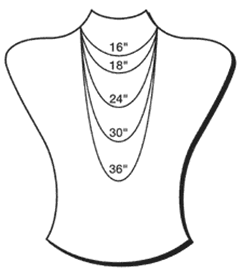
Most people understand the importance of knowing their ring size, but it is a lesser-known fact that sizing in jewelry is not exclusive to rings. As some of the best jewelry available to consumers is increasingly being offered online, knowing exactly what you want a particular necklace length to look like is just as important.
Self-sizing for Rings
1. Cut a piece of string or paper at least 4-5” long. If you are using paper, make sure it is not too wide (a width of 1” is generally recommended).
2. Wrap the string or paper around the base of the finger you are sizing. It should wrap snugly around your finger, but not too tight that it causes discomfort.
3. With a pen or pencil, mark the point where it meets the end and completes a circle around your finger. Measure the length of the string or paper that was wrapped around your finger.
4. Use the following chart to determine your ring size. Find the line that corresponds most closely to the length of your string and paper, taking into consideration the size of your knuckle and propensity to swelling.
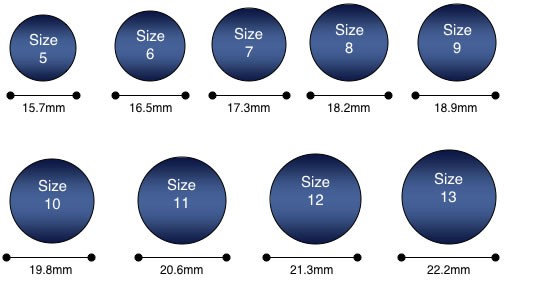
5. If you already have a ring that fits you perfectly, print the above image and place your ring on top of any of the circles for a close match.
Discovering the Perfect Necklace Length for All Occasions
1. Choker (14-16 inches)
A choker should fall naturally around the base of your neck. It should not wrap the middle of your neck tightly like a collar necklace. Chokers are extremely versatile; they tend to go well with any neckline.
2. Princess (17-19 inches)
This is the most common length for necklaces, falling over the collarbone. Many people opt for a pendant or charm at the end of a princess length necklace.
3. Matinee (20-24 inches)
Matinee length necklaces are noticeably longer than princess length necklaces and tend to fall on the chest area. This length is idea for business or casual attire.
4. Opera (28-34 inches)
Opera length necklaces are often seen in the form of pearl necklaces, as it is an elegant length that compliments both day and evening looks. Opera length necklaces can be worn as a single strand or wrapped twice as a double strand.
5. Rope (over 45 inches)
Rope length necklaces are usually worn as a double strand, or layered with other shorter pieces closer to the neck. In the case of a rope length pearl necklace, the end can be tied for a more glamorous look.